
Compare South Carolina pool builders before you sign
192 pool contractors across 28 South Carolina areas, from the Grand Strand to the Upstate, with exactly what each one builds confirmed from its own website and whether it states a state license. Free, no sign-up, no sales calls.
- Service details confirmed on each builder’s own website
- State license statements recorded, never assumed
- Compare before you buy
Featured South Carolina pool builders
SponsoredThe featured spot here is open — one business only. The State Page Featured Placement: the most-viewed page on the site.
Put your company at the top for all of South CarolinaPool builders by area
Pick your part of South Carolina. Every area page lists the builders based there and in the nearby towns, what each one builds, and which ones state a license.


What do you want built?
What we check before a builder is listed here
The builder’s own website
We read each site and record sixteen yes-or-no facts — new pools, remodels, spas, gunite, fiberglass, outdoor living, financing, warranty and more. If the site doesn’t say, we say “not confirmed”.
Licensing, the South Carolina way
Since 2023 any pool job over $10,000 needs a Contractor’s license with the Swimming Pools classification, or a Residential Builder license, from the Department of Labor, Licensing and Regulation. We record whether each company states one, and every profile explains how to confirm it on the LLR lookup.
Nothing else
No star ratings copied from other sites, no paid positions in the list, no AI-generated project photos. Sponsored cards sit in a labeled band, and the list order never changes for money.
Records last checked November 3, 2026. Read the full method.
Every South Carolina area with pool builders
Before you hire a South Carolina pool builder
Palmetto Pool Guide is a directory of swimming pool builders, remodelers and resurfacing contractors in South Carolina, published by Local Guide Press. Every listing is built from public records and the builder's own website. Nothing here is a review, and no builder pays to be listed or to move up the list. I'm Jenna Payne, the research editor, and my job is to show what I could confirm and say plainly what I could not.
South Carolina changed its rules recently in a way that matters to anyone hiring a pool builder: since May 19, 2023, building, servicing or repairing a residential pool for more than the statutory threshold requires a state licence, either a General Contractor licence with the Swimming Pools classification or a Residential Builder licence, both issued by the Department of Labor, Licensing and Regulation (LLR). Before that date there was a gap, and some companies built pools for years without one. So the licence question is the first filter on this site. Until the state's licensee list is matched to these listings, what I can show is whether a builder's own website states a licence; the section on labels below explains exactly what that does and does not mean. Use the city pages to find builders who work in your area, then open a listing to see what was recorded and when. If a listing is wrong, email editor@localguidepress.com and I'll fix it, usually within five business days.
Licensing in South Carolina: two boards, one requirement
Two boards inside LLR can license a residential pool builder. The Contractor's Licensing Board issues the General Contractor licence under Title 40, Chapter 11; since Act 69 of 2023 its 'Swimming Pools' classification in section 40-11-410(4)(k) covers residential, commercial and institutional pools and spas, and section 40-11-30 requires the licence on any job over $10,000. Each General Contractor licence also carries a group under section 40-11-260 that caps the job size: Group 1 stops at $100,000, Group 2 at $400,000. The Residential Builders Commission issues the Residential Builder licence under Chapter 59, required over $5,000, backed by an exam and a $15,000 bond; LLR's notice to building departments accepts either licence for a residential pool. The specialty-contractor registrations in Chapter 59 (masons, carpenters and so on) do not include a pool category, so a registration alone does not cover building one. Unlicensed work is a misdemeanor under both chapters, and an unlicensed builder cannot sue to enforce its contract or file a lien. Verify any licence in the free LLR Licensee Lookup, checking both boards. Complaints go to LLR's complaint page; the boards can fine, suspend and revoke, but LLR says plainly that it cannot award you money, and South Carolina has no contractor recovery fund.
What the listing labels mean
Each listing shows a small set of labels. They are facts with dates, not endorsements. License stated on site means the company's own website states that it holds a South Carolina contractor licence or registration, and I recorded that statement on the date shown. It is recorded, not verified: I have not yet matched it to the state's licensee file, and until the LLR list arrives the label tells you only what the builder says about itself. When the match is made, the label will change to show the licence number and the board that issued it. A listing without the label is not an accusation; many licensed builders simply do not put the number on their website. Ask for it and check it yourself in the LLR lookup, which takes a minute. Verified by the business means someone at the company confirmed the listing's details from a company email address. Premium marks a paid enhanced profile; it never changes a builder's place in the list, and the order is the same whether or not anyone pays. Anything in a band marked Sponsored is paid placement and is labelled as such. There are no star ratings anywhere on this site, and I do not copy them from other platforms.
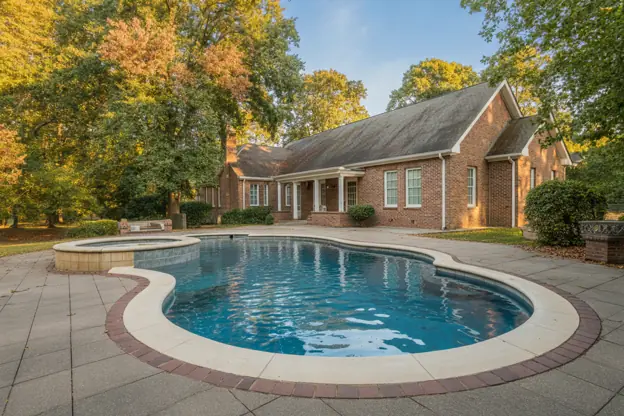
Gunite, fiberglass or vinyl in South Carolina clay and sand
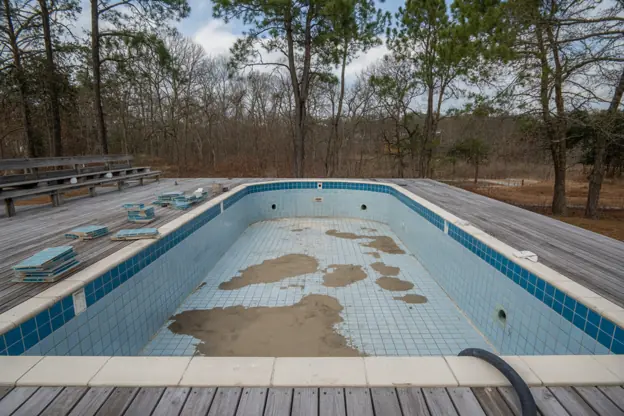
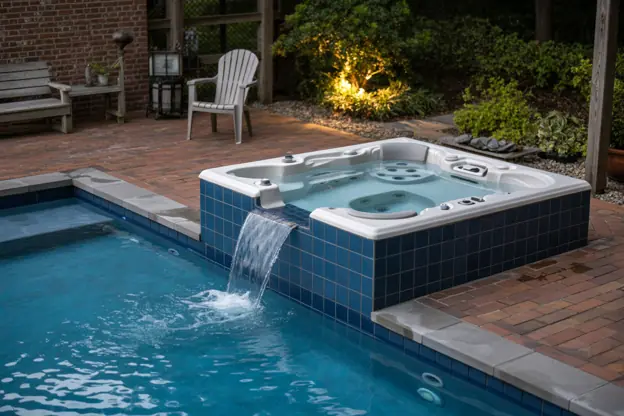
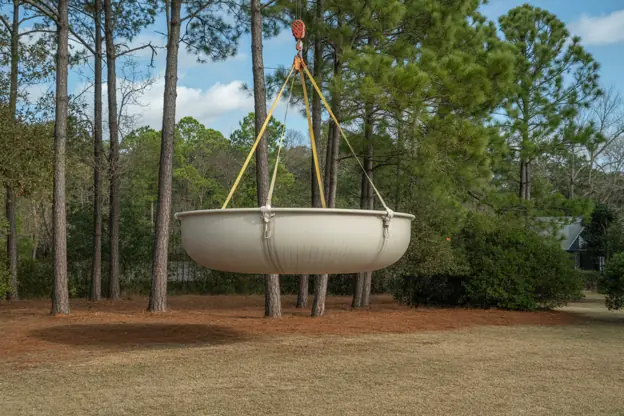
In South Carolina the ground decides more than style does, and it changes across the state. The Piedmont soils of the Upstate are deep, red and clayey; the state's own soils material lists the common Cecil and Appling series as high shrink-swell, which stresses rigid decks and any shell not engineered for movement, and rock is common below. The Coastal Plain, from the sandhills around Columbia to the Lowcountry and the Grand Strand, runs from sandy and well drained to very poorly drained, with a water table close enough to the surface that the City of Charleston requires engineer-sealed plans addressing buoyancy before it issues a pool permit. Gunite handles both when the steel is sized for the soil, and it is the choice for custom shapes, spas and deep ends. Fiberglass installs in days, resists algae and flexes slightly with clay, but shape and size are fixed by the mould and the crane, and an empty shell in a high water table is the one most likely to float. Vinyl liners are more common here than in Florida, because a shorter season is easier on the liner; the trade is a liner replaced on a cycle of years. Ask a builder what your soil is before you ask what the pool costs.
Permits and the barrier rules
South Carolina enforces the 2021 International Residential Code with state modifications, effective January 1, 2023, and the 2020 National Electrical Code, through county and city building departments; the Building Codes Council has set the 2024 editions to take effect January 1, 2027. Every jurisdiction I checked issues a residential pool permit, and the only statewide exemption is in section 40-59-265 for prefabricated pools less than 24 inches deep. The contractor normally pulls the permit; the contract should say so. Inspections typically run site, steel, bonding before shotcrete, deck bonding, barrier before filling, and final, as Columbia's list shows. The state treats the International Swimming Pool and Spa Code as permissive, so the barrier rule is adopted locally, and the counties I read have adopted ISPSC Section 305: Greenville and Horry make the owner sign a notarized affidavit before the permit. The barrier must be at least 48 inches high with no 4-inch openings, gates must open outward and self-latch with the release on the pool side, and doors from the house need a UL 2017 alarm or a self-latching closer; a safety cover listed to ASTM F1346 is the alternative. Nothing is used until the barrier passes final. HOA approval under Title 27, Chapter 30 comes before all of it.
How to compare bids and what the contract must say
Get three written bids for the same design, each as a base price with a separate options list, so the totals line up. Each should name the shell type, dimensions and depth profile, the finish, tile and deck with square footage, the equipment by make and model with the pump's rated watts, the barrier and who builds it, and who pulls the permit. South Carolina prescribes no contract language for pool work, so the contract has to carry its own protections. It must show the exact licensed name and number; section 40-11-370(B) makes contracting under another name unlawful. It should set start and completion dates with milestones, list allowances for rock and groundwater as allowances with unit prices, and state the warranties on shell, finish, equipment and workmanship. The state sets no deposit cap, so a modest deposit for drawings, permits and special orders is normal and half the price before digging is not. Payments trail the work, with the last one after the final inspection. Lien releases matter because section 29-5-20 lets a subcontractor you never hired lien your home, while section 29-5-40 caps all liens at what you still owe; take a written release from the builder and major subcontractors with each payment. Ask who files the Notice of Project Commencement under section 29-5-23.
Timeline and the best time to build in South Carolina
Count three clocks. The first is paperwork: HOA review, drawings, engineering where the city requires it, and plan review, which in a busy spring runs to weeks. The second is construction. A gunite pool moves through excavation, steel, shotcrete, curing, tile and coping, deck, barrier, equipment and interior finish, with inspections between stages; builders commonly quote two to four months of site time when weather and trades cooperate. A fiberglass shell is set in days once it arrives, but the factory order and the crane add weeks of lead time. The third clock belongs to other companies: the fence, the deck and the electrical final. Weather sets the calendar. Summer brings afternoon storms, and on the coast the Atlantic hurricane season runs June 1 to November 30 with its peak on September 10; SCEMD says every county in the state can be directly affected, and a dig opened in late August on a low Lowcountry lot is the wettest of the year. In the Upstate, hard freezes stop plaster but rarely excavation. Fall and winter are the quiet season, when a builder's calendar is open and a buyer has the most leverage; a fall contract is usually swimming by the April pollen. Ask for a written schedule with a separate date for each outside trade.
What I check and what I cannot
I read each listed builder's own website and record its service details, the areas it says it serves and whether it states a South Carolina licence or registration, with the date I read it. Those are the builder's statements, not mine. I have not yet matched the listings to LLR's licensee file; when that file is in hand, each match will show the licence number, the issuing board and the date, and a listing that does not match will say so without implying anything, because licences are often held under an individual's name or a different entity. The LLR lookup is the live source and takes a minute. I do not visit job sites, speak to customers or verify workmanship, and I cannot tell you whether a builder will finish on time or how its last pool held up in a wet winter. Prices are deliberately absent because they go stale fast and vary by yard, county and soil. Where a fact depends on a rule that can change, such as a statute section, a code edition or a county checklist, I date it and link the primary source; everything on this page was checked as of November 2026. If you find an error, email editor@localguidepress.com. Corrections are posted with the date they were made.
South Carolina pool questions, answered
How much does it cost to install an inground pool in South Carolina?
This directory does not publish price tables. Pool pricing in South Carolina moves with material costs, labor demand, the county and the yard, so any single number would be stale within a season. What the editor can say is what sets the price. The shell type (gunite, fiberglass or vinyl liner) sets the base. Size and depth add excavation, steel and finish. Interior finish, tile, decking, equipment, a heater and water features each add a line. South Carolina adds items that depend on where you live. In the Upstate the Piedmont's red, clayey soils, which the state's own soils material describes as high shrink-swell, can mean harder digging, rock, and extra engineering for the shell and deck. In the Lowcountry and along the Grand Strand the City of Charleston requires structural plans sealed by a South Carolina engineer that address buoyancy from high water tables, and a flood-zone lot adds anchoring and elevated equipment. A fiberglass shell also carries crane and freight costs that depend on the route to your lot. The clearest way to learn current pricing is to collect three written bids for the same design in the same month, as of November 2026.
How much does it cost to run a pool pump in South Carolina?
The arithmetic is the pump's draw in kilowatts, times hours per day, times your rate. The U.S. Energy Information Administration's Electric Power Monthly put South Carolina's average residential price at 15.76 cents per kilowatt-hour for August 2026, against a U.S. average of 18.16 cents; your Duke Energy, Dominion Energy, Santee Cooper or cooperative bill shows your own rate and any seasonal tiers. As an illustration only, a single-speed pump drawing 1.5 kilowatts for 12 hours uses 18 kilowatt-hours a day, which at the EIA average is about $2.84 a day or roughly $85 a month; the same pool on a variable-speed pump running longer at low speed uses a fraction of that, because, as ENERGY STAR explains, cutting pump speed in half cuts energy use to about one-eighth. ENERGY STAR puts a pool pump at up to $310 a year as a home's second-largest energy user and says running a filter six hours instead of twenty-four cuts its use by 75 percent. Ask the builder for the pump's make, model and rated watts, and whether it is variable-speed, before you compare bids, as of November 2026.
Does a pool add value to a home in South Carolina, or devalue it?
Neither answer is reliably true in South Carolina, and the editor found no South Carolina-specific study worth citing. What appraisers and agents say consistently is that a pool returns part of its cost in neighborhoods where pools are common and buyers expect one, and little or nothing where it is unusual or where the yard is small. The coast and the Midlands, with long hot summers, sit closer to the first case; the Upstate, with a shorter season and freezes, sits closer to the second, though pools are common in newer subdivisions there too. A pool narrows the buyer pool as well as widening it: families with small children and buyers who do not want the upkeep will pass. Condition matters more than existence. A pool with a tired finish, old equipment or no compliant barrier is a negotiating point against the seller, and a buyer's inspector will flag a fence or gate that does not meet the county's ISPSC Section 305 affidavit. Build a pool because you will use it; treat any resale gain as a bonus, not the reason.
Will a pool raise my property taxes in South Carolina?
Usually yes, and the mechanism is written into the state code. Section 12-37-3140(A)(2) says the fair market value of 'subsequent improvements and additions' must be added to a property's value, and section 12-37-3130 defines additions or improvements to include new construction and renovation. The 15 percent cap on reassessment increases in section 12-37-3140(B) does not apply to an addition in the year it is first taxed, so the pool's value comes on the roll in full, and under subsection (E) that happens in the tax year after the one in which it is built. The county assessor normally learns about it from the building permit. What you pay on that added value depends on your assessment ratio: an owner-occupied legal residence is assessed at 4 percent of fair market value under section 12-43-220(c), while a second home or rental is assessed at 6 percent under subsection (e), and the local millage does the rest. The assessor's number for the pool is its contribution to market value, not what you paid, and you can appeal it. Ask your county assessor how it values pools before you sign, as of November 2026.
How does a pool affect homeowners insurance in South Carolina?
A pool touches the policy in two places. First, liability. Insurers treat a pool as an added risk of injury to guests, and many will ask for a compliant barrier, a self-latching gate and no diving board or slide before they write or renew; some raise the liability premium, and many agents recommend a personal umbrella policy on top of the standard limit. Second, the structure itself. Whether a pool is covered as an 'other structure', and for what perils, varies by policy; wind and flood are the South Carolina questions, because flood is not covered by a standard homeowners policy at all and wind coverage on the coast often carries a separate, higher deductible. Tell your insurer before construction starts, ask for the pool's coverage and exclusions in writing, and ask whether the screened or fenced enclosure, the equipment and the deck are included. The editor could not find a South Carolina rule that fixes any of this; it is contract by contract. Keep the permit, the final inspection record and dated photos, which a claims adjuster will ask for after a storm.
Is a pool worth it in South Carolina, and what are the downsides of owning one?
The case for a pool in South Carolina is a long, hot season: in the Midlands and on the coast a heated pool is usable from spring into fall, and an unheated one from roughly late May to September. The case against is everything the brochure leaves out. Electricity for the pump and any heater, chemicals, water, a cover, an annual opening and closing in the Upstate, and a resurfacing or liner replacement every so often are the running costs. The barrier is a legal requirement, not an option, and it is inspected before the final. Property tax rises in the year after the build. Insurance may rise. Pollen season in the spring turns the surface yellow for weeks, and a pool under oaks or pines means a lot of skimming. Time is the cost most people underestimate: a pool without an automatic cleaner and a variable-speed pump on a timer takes hours a week. If you will swim several times a week for four or five months, the sums usually work; if the pool is for the two weeks the grandchildren visit, a community pool or a membership is cheaper. The honest test is how many days you would actually use it.
How long does an inground pool last in South Carolina?
The structure and the surface have different lives. A properly built gunite or shotcrete shell is expected to last for many decades; what wears is the interior plaster, pebble or quartz finish, which is redone on a cycle of years, and the tile, coping and equipment, which are replaced as they fail. A fiberglass shell is a single moulded piece, and well-made ones have been in the ground for decades; after 25 years the typical issues are a faded or chalky gelcoat, spider cracks in the surface layer, and older plumbing and equipment, all of which can be addressed without replacing the shell, though an in-place refinish of fiberglass is a specialist job. A vinyl liner pool's walls and floor last a long time, but the liner itself is a consumable, replaced several times over the pool's life. In South Carolina, Upstate freeze-thaw cycles are hard on coping, tile lines and any water left in exposed plumbing, and coastal salt air and salt-water chlorination are hard on metal fittings and some stone. Equipment is the shortest-lived part everywhere: pumps, heaters and salt cells are replaced several times before the shell needs anything structural.
Do pool builders need a license in South Carolina?
Yes, since May 19, 2023. Before that date South Carolina's state contractor licence covered commercial pools and residential pool work fell into a gap. Act No. 69 of 2023 (H.4115) amended Title 40, Chapter 11, so that the Contractor's Licensing Board's 'Swimming Pools' specialty classification in section 40-11-410(4)(k) now covers 'the construction, service, and repair of all residential, commercial, and institutional swimming pools and spas', including concrete, gunite, vinyl-lined and fiberglass pools, decks, coping, equipment, pool piping and the wiring from the equipment to the first disconnect. The Board's notice to building departments says a contractor may satisfy the requirement either with a General Contractor licence carrying the Swimming Pools classification, or with a Residential Builder licence from the Residential Builders Commission under Title 40, Chapter 59. The licence is required when the total cost of construction exceeds the statutory threshold, which section 40-11-30 set at $10,000 in the same 2023 act; a residential builder's own threshold under section 40-59-20(6) is $5,000. The electrical and plumbing connections still need their own licensed trades. Temporary pool licences issued in 2023 for existing builders expired June 30, 2024, so a builder working today should hold a permanent licence, as of November 2026.
What are the pool fence and barrier requirements in South Carolina?
South Carolina has no separate pool safety statute of its own; the barrier rules come through the building code. The state's list of codes in effect makes the International Swimming Pool and Spa Code (ISPSC) 'permissive', meaning a county or city must adopt it by ordinance before enforcing it, and the two Upstate and Grand Strand counties the editor checked have done so. Greenville County's and Horry County's pool fence affidavits, which the owner signs and has notarized before the permit, both adopt ISPSC Section 305; Horry cites the 2021 edition. Section 305's numbers are these.
The barrier must be at least 48 inches high on the outside, with no opening that passes a 4-inch sphere and no more than 2 inches of gap at the bottom over grass, or 4 inches over a hard surface. Pedestrian gates must open outward, self-close and self-latch, with a latch release below 54 inches placed on the pool side at least 3 inches below the top of the gate. A 36-inch clear zone must separate the barrier from anything climbable such as equipment, and the barrier must sit at least 20 inches from the water's edge. Where a house wall forms part of the barrier, doors and low windows that open to the pool need a UL 2017 water-hazard alarm, or a safety cover listed to ASTM F1346, or self-closing, self-latching doors. Both counties inspect the barrier, gates and alarms at the final and bar use of the pool until it passes. Columbia and Charleston reach similar results through their own checklists, so ask your building department which edition it enforces, as of November 2026.
Do above-ground pools need a permit and a fence in South Carolina, and why can't you bury one?
A permanent above-ground pool needs a permit in every jurisdiction the editor checked; the City of Columbia names 'permanent above-ground pools' in its permit requirement, and the only statewide exemption is section 40-59-265(A)(1)(g) for prefabricated pools less than 24 inches deep. The barrier rule applies too, with one allowance: ISPSC Section 305.5, as adopted in Horry County, lets the pool's own wall serve as the barrier if it meets the 48-inch height and clearance rules, the manufacturer allows it, and the ladder or steps can be locked, secured or removed; a barrier mounted on top of the wall must follow the manufacturer's instructions, and mesh fences cannot be installed on top of an on-ground pool. The electrical bonding and GFCI rules of the National Electrical Code apply to the pump regardless. As for burying one: an above-ground pool's wall is thin steel, resin or aluminum designed to be held in shape by the water inside and air outside. Backfilled soil, and in South Carolina wet clay or a high water table, pushes inward when the pool is drained for a liner change and the wall buckles; the uplift that floats inground shells works on a buried liner too. A 'cowboy pool' is a galvanized stock tank used as a plunge pool; it still holds more than 24 inches of water, so treat it as a pool for permit and barrier purposes and ask the building department before you plumb it, as of November 2026.